
Careers
China Top Industrial and Chemical Solutions Suppliers?
China has become a central source of industrial and chemical solutions for energy, manufacturing, water treatment, and process automation. The scale is substantial. The China Petroleum and Chemical Industry Federation reported approximately RMB 15.95 trillion in operating revenue for China’s petroleum and chemical industries in 2023. Cefic’s Facts and Figures 2024 also estimated that China represented about 41% of global chemical sales in 2023. These figures explain why international buyers examine Chinese suppliers beyond simple price comparisons.
This overview will assess leading suppliers through practical criteria. These include production capacity, certification, technical service, export experience, delivery reliability, and environmental performance. A supplier may provide reactors, pumps, dosing systems, specialty chemicals, industrial gases, or complete process packages. Site evidence matters. Look for traceable batch records, calibrated instruments, clear safety data sheets, and engineers who can explain maintenance procedures. The China Chemical Industry Association and ISO certification records can support supplier verification, but neither should replace an on-site audit.
No supplier wins every category. Data can lag. Public rankings often mix manufacturers, distributors, and engineering contractors, which makes direct comparison imperfect. Buyers should therefore separate verified operating results from promotional claims. The International Energy Agency’s World Energy Investment 2024 report highlights continuing investment in industrial efficiency, electrification, and cleaner production, increasing demand for measurable performance. This article introduces prominent Chinese suppliers and explains where each may fit. The evaluation remains practical, not absolute. Local regulations, product specifications, and after-sales capability can change the final decision.
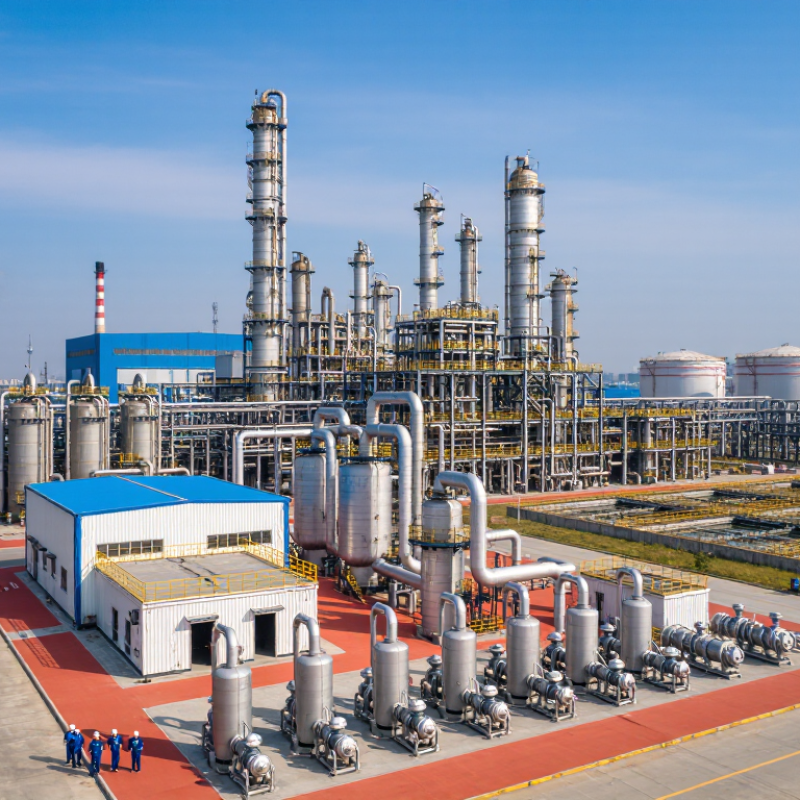
China’s Industrial and Chemical Market Reached RMB 15.95T Revenue in 2023
China’s Top Industrial and Chemical Solutions Suppliers
China’s petroleum and chemical industry generated RMB 15.95 trillion in operating revenue in 2023. This figure comes from the China Petroleum and Chemical Industry Federation’s 2023 economic performance report. It shows the market’s extraordinary scale, from process equipment and industrial gases to polymers, coatings, and water-treatment systems. The number is impressive. It is not the whole story.
The National Bureau of Statistics reported continued investment in advanced manufacturing and chemical materials during 2023. Buyers should therefore assess suppliers beyond catalog size. Factory audits, ISO-certified quality systems, batch traceability, and verified production capacity matter more than polished websites. A reliable supplier should provide test reports, material specifications, safety data sheets, and clear delivery records. On a factory visit, simple details can reveal much: labeled storage tanks, calibrated instruments, clean sampling points, and operators who explain deviations honestly.
Revenue can hide weak margins, delayed payments, or uneven product quality. This needs more attention. Supplier comparisons should examine energy use, research capability, export documentation, and after-sales response. The International Energy Agency also identifies China as a major force in global clean-energy manufacturing, increasing demand for specialty materials and process technologies. Yet market data changes quickly, and some published figures use different statistical boundaries. Buyers should confirm definitions, audit recent records, and test samples before signing long-term contracts.
China Top Industrial and Chemical Solutions Suppliers? - China’s Industrial and Chemical Market Reached RMB 15.95T Revenue in 2023
| Market Indicator | 2023 Value | Unit | Year-on-Year Change | Business Relevance | Data Source |
|---|---|---|---|---|---|
| Industrial and chemical industry operating revenue | 15.95 | Trillion RMB | Approximately −1.7% | Defines the overall revenue scale for China’s petroleum, chemical, and related industrial value chain. | China Petroleum and Chemical Industry Federation, 2023 industry statistics |
| Industry total profit | 873.4 | Billion RMB | Approximately −44.7% | Indicates margin pressure and the importance of energy efficiency, process optimization, and cost control. | China Petroleum and Chemical Industry Federation, 2023 industry statistics |
| Crude oil processing volume | 735.48 | Million tonnes | +9.3% | Supports demand for refinery equipment, catalysts, storage systems, instrumentation, and industrial maintenance services. | National Bureau of Statistics of China, 2023 industrial output data |
| Crude oil production | 208.9 | Million tonnes | +2.0% | Reflects upstream demand for drilling equipment, oilfield chemicals, production systems, and safety solutions. | National Bureau of Statistics of China, 2023 energy production data |
| Natural gas production | 229.7 | Billion cubic metres | +5.6% | Creates opportunities for gas processing, pipeline components, compression, metering, and emissions-management solutions. | National Bureau of Statistics of China, 2023 energy production data |
| Ethylene production | 31.89 | Million tonnes | Approximately +6.5% | Signals demand across petrochemical feedstocks, crackers, polymers, process controls, and plant engineering. | National Bureau of Statistics of China, 2023 industrial production data |
| Chemical raw-material manufacturing output growth | 4.4 | Percent growth | Year-on-year, 2023 | Provides a broad indicator of production momentum for basic chemical materials and upstream industrial inputs. | National Bureau of Statistics of China, 2023 industrial production data |
| Industrial fixed-asset investment in the chemical materials sector | 8.7 | Percent growth | Year-on-year, 2023 | Highlights continued investment in capacity expansion, advanced materials, process upgrades, and industrial infrastructure. | National Bureau of Statistics of China, 2023 fixed-asset investment data |
Note: Figures are rounded where appropriate. Revenue and profit refer to the petroleum and chemical industry classification used by the cited industry statistics.
Related Posts
-

What Is Superior Chemical Solutions Used For?
-
How to Find the Best Industrial Chemical Solutions for Your Needs?
-
How to Choose the Right Manufacturing Chemical for Your Needs?
-

2026 Best Columbus Chemicals Insights from 139th Canton Fair?
-
Top 10 Tips for Choosing the Right Industrial Chemical Packaging Solutions
-
How to Optimize Chemical Processing for Efficiency and Safety?