


Careers

China Top 10 Premium Granite Base Manufacturers?

China’s stone industry has developed a strong reputation for precision, variety, and large-scale production. This guide introduces ten manufacturers known for producing premium granite base products for construction, landscaping, monuments, and architectural projects. Their capabilities may include quarry sourcing, CNC cutting, waterjet processing, edge finishing, polishing, packaging, and export support.

Quality begins with the stone itself. Reliable manufacturers should identify granite origin, color variation, density, water absorption, and surface durability. Factory experience also matters, especially when bases require accurate dimensions, chamfered edges, drilled holes, or custom profiles. A sample inspection can reveal uneven polishing, resin repairs, hairline cracks, or inconsistent thickness.

Details matter.

The selection process considers production equipment, material traceability, quality-control procedures, finishing skills, communication, and delivery performance. Certifications and documented inspection records can strengthen confidence, but they should not replace physical testing or clear contract terms. Buyers should confirm drawings, tolerances, packing methods, moisture protection, and responsibility for replacement claims before placing large orders.

This ranking is intended as a practical starting point, not an unquestionable verdict. Manufacturer capabilities can change, and public information may remain incomplete. Some companies excel at standard granite bases, while others perform better with architectural customization or high-volume orders. Requesting recent project photos, material samples, and independent test results remains sensible. A polished website is not enough. Careful verification protects both quality and budget.
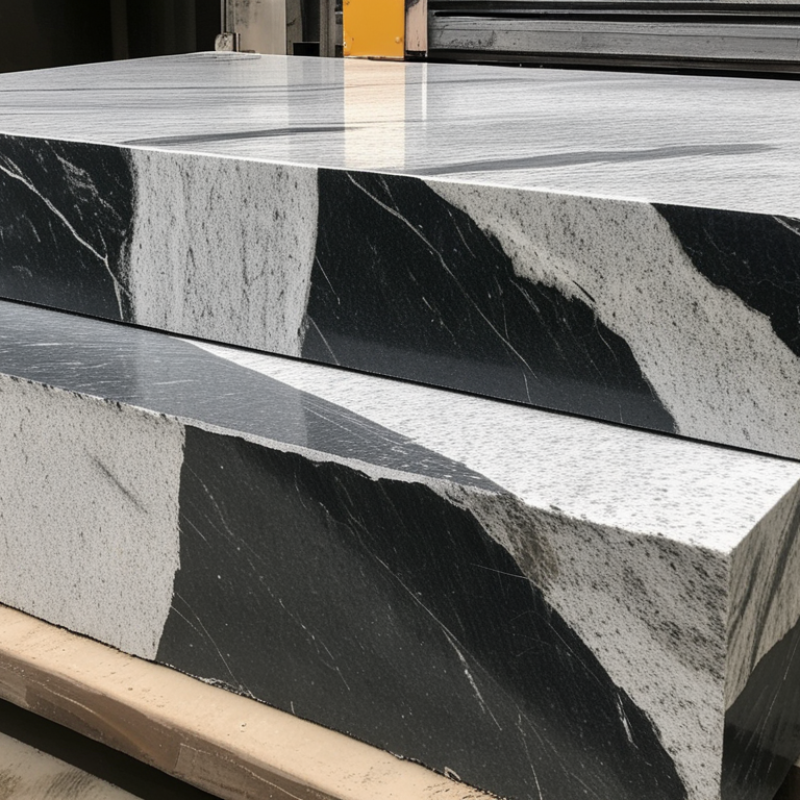
China Top 10 Premium Granite Base Manufacturers?

China’s Granite Base Industry: Materials, Standards, and 2024 Market Data

China Top 10 Premium Granite Base Manufacturers?

China’s granite base industry is expanding with architectural renovation and premium memorial applications. IMARC Group’s 2024 Granite Market Report valued the global market at approximately US$17 billion in 2023. It also projects steady growth through 2032. China remains a major processing and exporting center, supported by cutting, polishing, and CNC fabrication capacity.

Premium granite bases require more than attractive color. ASTM C615 covers structural granite requirements, while ASTM C97 measures absorption and bulk specific gravity. ASTM C170 tests compressive strength. European projects may also reference EN 1469 for external cladding products. A qualified manufacturer should provide batch records, dimensional tolerances, water absorption results, and visual inspection photos. Granite with uniform grain is usually preferred. Yet natural stone is never perfectly identical.

Tips: Ask for a recent test report, not a generic certificate. Confirm whether the quoted thickness is finished thickness. Check edge polishing under direct light. Small flaws often appear there. For the top ten Chinese manufacturers, compare quarry source, resin treatment, CNC accuracy, packaging, and replacement procedures. These details often reveal more than showroom images.

China Customs statistics for HS Code 6802 show continued international movement of worked stone products in 2024, although the category includes several stone types. That limitation matters. Market data can indicate demand, but it cannot prove manufacturing quality. My practical view is simple: select suppliers through samples, measurable standards, and traceable production records. Price alone remains a weak quality signal.

How to Rank the Top 10 Manufacturers by Capacity, Certifications, and Exports

Ranking China’s top premium granite base manufacturers requires more than comparing catalogues. Capacity should combine monthly output, cutting-line count, kiln availability, and documented rejection rates. A site visit can reveal details that brochures hide, such as idle polishing equipment or stacked unfinished bases. USGS’s 2024 Dimension Stone summary also highlights production-data limitations. Therefore, audited factory records deserve greater weight than estimates.

Certifications provide a useful control point, not automatic proof of quality. ISO Survey 2023 recorded more than 1.26 million ISO 9001 certificates worldwide, making certificate verification essential. Check the certificate number, scope, issuing body, and expiry date. Add ISO 14001 when environmental management matters. For exports, compare customs records under HS 6802.93 with shipment frequency, destination markets, and container volumes. UN Comtrade data can reveal whether export claims match trade activity. A manufacturer with steady quarterly shipments may rank higher than one reporting impressive but unverified capacity. Some data remains imperfect.

Tips: Build a weighted scorecard. Assign 40% to verified capacity, 25% to certifications, and 35% to exports. Request three recent invoices, inspection reports, and packing photographs. Confirm granite density, water absorption, edge tolerance, and crack-repair disclosure. Small inconsistencies matter. A polished sample can conceal weak batch control. Personally inspect random pieces before final ranking.

Granite Base Quality Metrics: 2.63–2.75 g/cm³ Density and ASTM C615

China’s top granite base manufacturers should be judged by tested performance, not polished photographs. A density of 2.63–2.75 g/cm³ equals 2,630–2,750 kg/m³, a practical range for many dense granites. However, density alone cannot prove structural quality. ASTM C615/C615M establishes requirements for granite, while related ASTM test methods measure absorption, strength, and abrasion resistance.

The USGS Mineral Commodity Summaries reports that dimension stone quality depends on physical properties, geological consistency, and processing suitability. This matters for precision granite bases. A stable slab should show consistent density across sampled points, limited water absorption, and reliable flexural strength. Independent laboratory reports should identify the quarry lot, sample size, test date, and conditioning method. Supplier claims without traceable testing remain weak evidence. That is the uncomfortable part.

Tips: Request density results in both g/cm³ and kg/m³. Compare at least three samples from one production lot. Check flatness after machining, not only before finishing. Ask whether ASTM C615 compliance covers the complete base or only the raw stone. Small variations can affect vibration control, mounting accuracy, and long-term stability. A 2.70 g/cm³ result looks excellent, but poor geometry can still make the finished base unsuitable.

China Top 10 Premium Granite Base Manufacturers — Granite Base Quality Metrics

Anonymous premium granite base samples are benchmarked by bulk density. All displayed values fall within the reported 2.63–2.75 g/cm³ range. The reference line represents the commonly cited ASTM C615 minimum density benchmark of 2.56 g/cm³; complete ASTM C615 verification also requires additional physical and mechanical testing.

Higher density generally indicates a more compact granite structure, but density alone does not determine suitability for a granite base. Confirm absorption, compressive strength, flexural strength, finish quality, and dimensional tolerances through current laboratory reports.

Top 10 Chinese Granite Base Manufacturers: Products, Markets, and Strengths

China’s top 10 granite base manufacturers serve architectural, memorial, landscaping, and furniture markets. Their product ranges include square plinths, stepped bases, round columns, urn stands, and custom CNC-carved components. Fujian and Shandong suppliers often focus on quarry integration and large-volume orders. Guangdong factories typically emphasize detailed finishing, waterjet cutting, and export-ready packaging.

Market demand remains substantial. Grand View Research valued the global natural stone market at about USD 33.5 billion in 2023, with projected growth through 2030. Granite bases benefit from durability, low maintenance, and strong outdoor performance. Chinese manufacturers commonly ship to North America, Europe, Australia, and the Middle East. Their strengths include block selection, automated polishing, resin repair, digital measurement, and container loading. Some workshops can maintain tight dimensional control across repeated orders. That matters when bases must align with statues, columns, or landscape walls.

However, quality is not uniform. The USGS 2024 Mineral Commodity Summaries places granite within the broader dimension-stone category and notes uneven reporting across countries. Buyers should request quarry origin, absorption data, compressive-strength results, edge drawings, and pre-shipment photographs. Small color differences can appear between quarry lots. This is easy to underestimate. The strongest manufacturers provide sample approval, moisture-resistant crates, corner protection, and clear tolerances. Their real advantage is not only price. It is repeatable processing, transparent inspection, and practical communication when specifications change.

Buyer’s Comparison Guide: ISO 9001, EN 12670, Tolerances, and Lead Times

China Top 10 Premium Granite Base Manufacturers?

A credible comparison starts with evidence, not a polished catalogue. ISO 9001 certification shows a controlled quality system, but it does not guarantee every granite base is accurate. Ask for the certificate scope, recent audit status, inspection records, and corrective-action history. EN 12670 helps establish consistent natural-stone terminology. It does not replace project-specific drawings, surface-flatness requirements, or acceptance criteria.

Tolerance control needs physical proof. Request a dimensional report for length, width, thickness, hole positions, squareness, and flatness. Confirm the measuring method, equipment resolution, temperature, and reference conditions. A granite base may look flawless under warehouse lighting yet fail after installation. Small defects matter. Discuss lapping quality, edge protection, threaded inserts, packaging, and lifting points before purchase.

Lead times should be separated into sample approval, production, inspection, packing, and shipping. Standard sizes may move quickly, while custom holes or large slabs require longer scheduling. Require a written production plan and realistic buffer days. In my experience, the weakest comparisons focus only on price and certificate logos. That is a mistake. Some suppliers communicate well but provide vague tolerance data; others offer strong reports but underestimate export handling. A buyer should score both technical proof and delivery reliability, then record unresolved questions before placing an order.

China Top 10 Premium Granite Base Manufacturers — Buyer’s Comparison Guide: ISO 9001, EN 12670, Tolerances, and Lead Times
Anonymous Supplier Typical Product Focus Common Granite Options ISO 9001 Status EN 12670 Reference Typical Flatness Tolerance Typical Dimensional Tolerance Surface Finish Typical Lead Time Buyer Verification Priority
Supplier 01 Large precision granite bases for coordinate-measuring and inspection systems Fine-grained black or dark grey granite Certificate claimed; verify scope Material terminology and classification reference; product compliance to be confirmed separately 0.005–0.015 mm over 300 mm, depending on grade and drawing ±0.10 mm typical; tighter limits available by quotation Lapped or precision ground; sealing optional 25–40 working days Inspection report, calibrated reference equipment, export packing method
Supplier 02 Machine-tool bases, risers, and modular granite support structures Medium- to fine-grained grey granite Customer documentation required EN 12670 may identify the stone type; acceptance criteria should be stated on the purchase drawing 0.010–0.025 mm over 300 mm ±0.15 mm typical Ground, lapped, and edge-chamfered 20–35 working days Flatness map, edge protection, hole-location capability
Supplier 03 Granite surface plates and precision inspection tables Dense black granite or uniform grey granite Certificate should be checked for current validity Reference standard only; EN 12670 does not define the complete surface-plate tolerance class 0.003–0.010 mm over 300 mm for selected inspection grades ±0.05–0.10 mm typical Hand-lapped working surface 18–30 working days Grade definition, repeatability data, certified calibration report
Supplier 04 Optical, laser, and metrology equipment granite platforms Low-porosity black granite Verify certificate number and manufacturing scope Stone identification may follow EN 12670 terminology; engineering requirements require a separate specification 0.005–0.020 mm over 300 mm ±0.05 mm typical on machined mounting features Precision lapped surface with threaded inserts 30–45 working days Thermal stability, insert material, hole-position report
Supplier 05 Custom granite machine frames and vibration-isolation bases High-density grey or black granite Verify certificate applicability to the supplied product EN 12670 classification should be listed on the material documentation where applicable 0.010–0.030 mm over 300 mm ±0.15–0.25 mm typical for large structural parts Precision ground or lapped; bonded feet optional 35–55 working days Load calculation, support-point layout, granite defect inspection
Supplier 06 Small and medium granite bases for sensors, stages, and laboratory equipment Fine-grained black granite Do not rely on an unverified claim Confirm the exact stone designation and test documentation 0.010–0.025 mm over 300 mm ±0.10–0.20 mm typical Lapped top surface; drilled and tapped holes available 15–28 working days Sample approval, hole position, thread quality, protective packaging
Supplier 07 Heavy-duty granite bases for automated inspection and production lines Dense dark grey granite Request a current third-party certificate copy Use EN 12670 for stone terminology, not as a substitute for dimensional acceptance criteria 0.015–0.040 mm over 300 mm ±0.20–0.30 mm typical for oversized bases Ground surface with sealed sides and chamfered edges 40–65 working days Rigidity, lifting points, crate design, shipping damage controls
Supplier 08 Granite tables for assembly, calibration, and quality-control workstations Grey granite with consistent grain structure Verify audit scope and production site Material description should be consistent with the applicable EN 12670 terminology 0.010–0.030 mm over 300 mm ±0.10–0.20 mm typical Fine ground or lapped, with optional grid lines 20–38 working days Surface roughness, grid-line accuracy, inspection method
Supplier 09 Precision granite rails, beams, and elongated machine components Fine-grained black or dark grey granite Certificate status must be independently confirmed Confirm stone type, petrographic description, and any required test results 0.010–0.025 mm over 300 mm; straightness separately specified ±0.10–0.20 mm typical Lapped reference surface with machined mounting faces 30–50 working days Straightness, twist, support conditions, rail mounting accuracy
Supplier 10 Export-oriented custom granite bases for OEM equipment integration Black, grey, or green-grey granite subject to availability Request certificate and recent audit evidence EN 12670 should be treated as a terminology reference; specify all performance requirements contractually 0.015–0.050 mm over 300 mm for general precision bases ±0.15–0.30 mm typical Ground or lapped; custom coating and inserts optional 25–45 working days First-article inspection, packaging, Incoterms, replacement policy
Buyer note: The supplier names are intentionally anonymized. The tolerance and lead-time figures are indicative purchasing ranges, not guaranteed certifications or rankings. ISO 9001 confirms a quality-management system when the certificate is valid and covers the relevant site and activities. EN 12670 is primarily a European standard for natural-stone terminology and classification; it should not replace a detailed drawing, inspection plan, or product-specific acceptance standard. Confirm granite grade, flatness method, datum points, temperature conditions, hole tolerances, calibration traceability, packaging, and final inspection before placing an order.

Article Source: