What are the Different Types of Pipe Couplings?
When it comes to plumbing and piping systems, understanding the various Pipe Coupling Types is essential. Couplings play a crucial role in connecting pipes, ensuring a secure and leak-free connection. There are many types of couplings, each designed for specific applications and materials.
Different Pipe Coupling Types can differ vastly in materials, assembly methods, and pressure ratings. For example, you might encounter rigid couplings, which provide a strong, fixed joint, or flexible couplings that allow for slight movements and adjustments. Knowing these differences can greatly impact the performance and longevity of your piping system.
However, not every coupling is suited for every situation. Choosing the wrong type can lead to failures, leaks, or even costly repairs. It’s vital to assess your specific needs based on factors like pressure, temperature, and fluid type. Ultimately, a well-informed choice in Pipe Coupling Types can enhance reliability and efficiency in your plumbing projects.
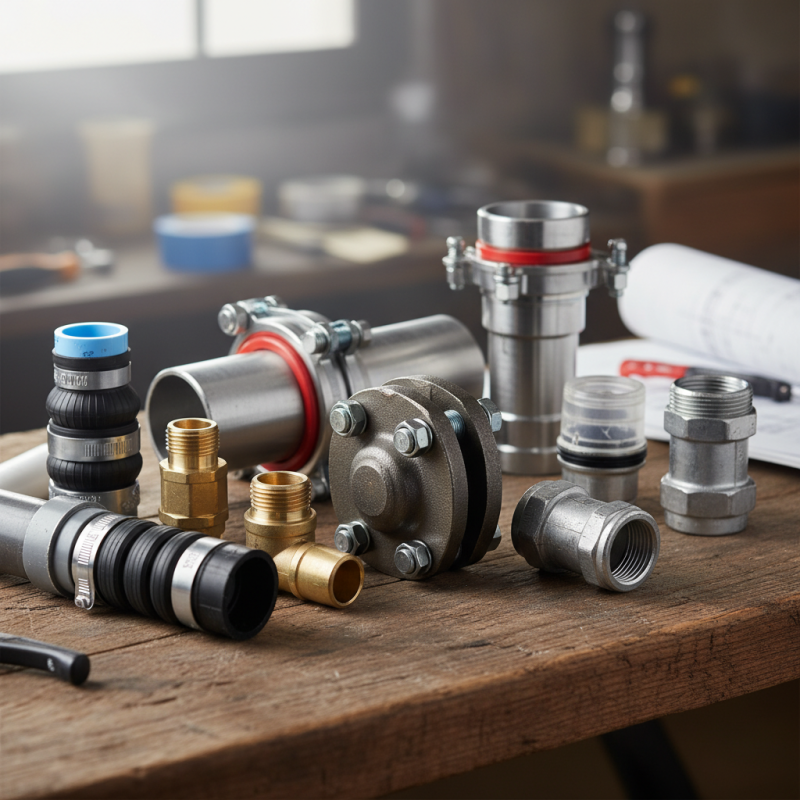
Types of Pipe Couplings: An Overview
When discussing pipe couplings, it’s essential to understand the various types available. Couplings serve a vital role in connecting pipes and ensuring a secure seal. Each type has unique properties that cater to specific applications and environments. For example, a slip coupling allows for easy adjustments, while a threaded coupling provides a strong and reliable connection.
Flexibility is a key advantage of using pipe couplings. They can accommodate the thermal expansion of pipes. In industrial settings, a failure in couplings can lead to leaks, making the choice of type critical. Using the wrong coupling can be a costly mistake. Selecting the right materials is also crucial. Factors such as temperature and pressure ratings must be considered.
Balance is necessary in coupling choices. While durable options exist, they may not always be the most suitable for every situation. The need for effective communication with suppliers is vital in ensuring the correct springs and seals are selected. There’s room for improvement in understanding how these couplings interact with different systems. Knowledge and experience in this area can lead to better outcomes in healthcare, plumbing, and construction.
Rigid Couplings: Features and Applications
Rigid couplings are essential components in various piping systems. They connect two pipe ends securely, ensuring a tight seal. This type of coupling is particularly useful when precise alignment is necessary. Industries often rely on rigid couplings for structural support and stability.
One notable feature of rigid couplings is their ability to transmit torque efficiently. For example, in mechanical systems, these couplings help maintain the alignment of shafts. They also prevent any movement between the connected pipes. However, installing rigid couplings can be challenging. It requires careful measurement and alignment to avoid stress in the piping system. Users must consider the potential for thermal expansion and contraction, which can lead to issues over time.
Common applications of rigid couplings include water supply lines and industrial processes. In these scenarios, the reliability of the connection is vital. While rigid couplings are robust, they may limit the flexibility of the piping system. This rigidity can be a drawback in situations where flexibility is needed. It is essential to evaluate the specific requirements of a project before choosing rigid couplings. Understanding these factors can lead to more successful installations.
Flexible Couplings: Benefits and Use Cases
Flexible couplings are crucial in various piping systems. They provide essential benefits, particularly in systems where vibration damping and movement compensation are needed. Industry reports highlight that flexible couplings can reduce stress on pipes by up to 30%. This significant reduction extends the lifespan of pipe systems and minimizes the risk of failures.
In applications like wastewater management and industrial processing, flexible couplings allow for misalignment and thermal expansion. This flexibility is vital, particularly in locations susceptible to ground movement or structural shifts. Data from industry sources indicates that 70% of failures in piping are related to misalignment issues. Utilizing flexible couplings can effectively mitigate these risks and enhance overall system reliability.
However, flexible couplings are not without challenges. They may require regular inspections to ensure their integrity. The material choices can also impact performance. For instance, rubber and plastic-based couplings can degrade over time, especially under UV exposure or chemical attack. Thus, selecting the right type of flexible coupling for specific environments is essential. Proper evaluation and maintenance can lead to optimal performance and longevity in various applications.
Threaded Couplings: Design and Installation
Threaded couplings are common components in various piping systems. They consist of two male-threaded ends that join sections of pipe. These couplings provide a tight seal, making them suitable for a range of applications, from residential plumbing to industrial setups. The design of threaded couplings allows for easy installation, which can be a significant advantage in time-sensitive projects.
Installing threaded couplings requires careful attention to detail. Proper alignment is crucial to avoid leaks. It’s also vital to ensure that threads are clean and free from debris before assembly. Over-tightening can lead to stress fractures, while under-tightening might cause leakage. Both scenarios serve as reminders of the importance of precision in installation.
While threaded couplings offer reliability, they may not be suitable for all situations. In environments with high vibration or thermal expansion, alternative coupling types may perform better. Understanding the specific needs of your project is essential in making the right choice. Engaging with professionals during the planning phase can help mitigate risks associated with improper installation.
Compression Couplings: Functionality and Types
Compression couplings play a crucial role in connecting pipes within various applications. These fittings are designed to accommodate slight misalignments and thermal expansions. They utilize a compression mechanism, which creates a secure seal around the pipe. This prevents leaks, ensuring system efficiency and durability. According to industry reports, the global market for compression fittings is projected to reach over over $5 billion by 2026, indicating robust utilization across sectors.
There are several types of compression couplings, each suited for specific applications. For instance, standard compression fittings work well with plastic and metal pipes. They are often used in plumbing systems. Another type, called the transitional coupling, aids in connecting pipes of different materials. This versatility makes them indispensable in construction and renovation projects.
Tips: Ensure that your pipe diameters match the coupling specifications. This alignment is crucial to prevent leaks. Regular inspections can identify worn components before they cause significant issues. Always adhere to manufacturer guidelines for installation and maintenance for optimal performance. Identifying and addressing potential weaknesses in your installation can lead to better long-term results.